ArticlesHair care & breakage
Can Hard Water Make Your Hair Look Thinner? How to Spot Breakage
How minerals can affect the way hair feels, what bench studies measured, and where to look for signs of breakage.

After a move or a long trip, your hair may feel rougher and tangle more often. If the ends start looking sparse, it can feel like you’re losing density overnight. Start by locating the change. Short, uneven pieces along the lengths suggest a different problem from a part that is steadily getting wider. Both are worth observing, and they can happen at the same time. [5] [6]
At a glance
- Find the change
- Compare uneven ends, short broken pieces, and actual scalp coverage.
- Read the evidence
- Hard-water studies often test fibers outside the body, under specific exposure conditions.
- Reduce tugging
- Use conditioner for slip and detangle according to your hair texture.
What hard water can change
Hard water contains dissolved minerals, usually calcium and magnesium. If you are unsure whether your supply is hard, check a water provider report or use a hardness test intended for household water. This gives you a more concrete starting point than guessing based on how much a shampoo lathers. Lather also depends on the formula, the amount you use, and how much product or oil is present. [1]
Studies have shown that hair fibers can take up minerals, and that the condition of the hair and water chemistry can affect that process. Laboratory studies of tensile strength have reported mixed results under different exposure conditions. Those studies tell us about strands subjected to particular water samples in the lab. They do not establish that normal showering in hard water causes follicle-level hair loss. [2] [3] [4]

How to look for breakage
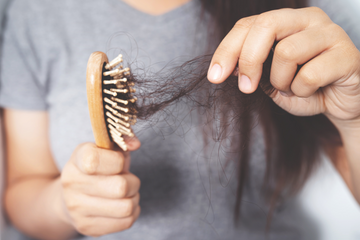
Look at the ends and the areas where you brush most often. Do you see a sudden uneven edge or many short pieces of different lengths? Is there a point along the shaft where tangles routinely form? Take note of heat styling, bleaching, tight styles, and the way you detangle. A move can also change humidity, wash frequency, and how often you heat-style, so water is one variable to consider. [5]
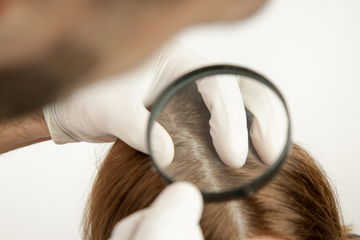
Compare a dry-hair photo of the lengths with a photo of your part under similar light. The length photo helps you track tangling, visible ends, and roughness. A consistent part photo is better for tracking a change in scalp coverage. If you see patches, a widening part, or persistent shedding, ask a clinician to assess it. [6]
Try a small change first
Start with a routine you can repeat. Use conditioner along the areas that snag. Work out tangles gently and reduce avoidable heat or pulling while you compare wash days. HairStem Conditioner is an option to compare for slip and ease of detangling. Read its directions and note whether the lengths are easier to handle over several washes. [5] [7]
If you are considering a house or shower product, verify whether it reduces hardness minerals specifically and whether that matters for your water supply. A device rated for another purpose may leave calcium and magnesium levels largely unchanged. It can be more useful to check your water report and simplify the hair routine before deciding what to buy. [1]
Common questions
Will conditioner change my water hardness?
Conditioner is a hair-care step. Judge it by how the lengths feel and how easily you can detangle. Check your water provider or an appropriate test for hardness. [1]
Can hard water and pattern thinning happen together?
Yes. Hair can feel rough at the lengths while a separate issue affects coverage at the scalp. Bring both observations to an assessment if the coverage keeps changing. [6]
References
Choose your next step

Featured in this guide
HairStem Conditioner
Compare the directions and see where it fits into your detangling routine.
View product detailsKeep reading

Shampoo & scalp care
How to Get Rid of Scalp Buildup Without Drying Out Your Hair
What to do when your roots feel coated, your ends feel dry, and you’re unsure whether the flakes are product residue or dandruff.

Thinning & shedding
Why Is My Hair Part Getting Wider? What to Look for Before You Buy Anything
A guide for women on what a widening part can look like, which nutrient tests to ask about, and how PCOS and menopause can affect the conversation.

Shampoo & scalp care
Peptide Shampoo for Thinning Hair: Is It Worth It?
What peptides do in a rinse-off formula, what you can judge after washing, and how to read hair-growth claims before you buy.


Check out what else William Gaunitz shared on InStyle, learn more about Advanced Trichology here, and follow us on Instagram!